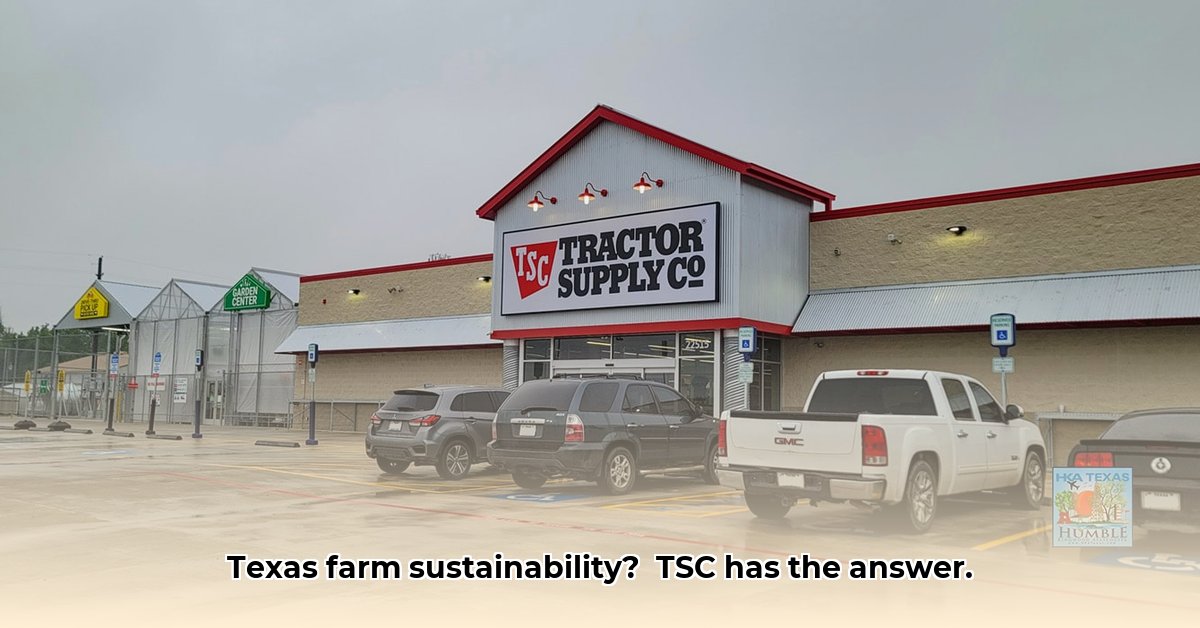
Running a successful and sustainable Texas farm requires careful planning and the right resources. This guide provides actionable steps to enhance your farm's environmental impact and profitability, leveraging the products and expertise available at Tractor Supply Center (TSC). Find your nearest TSC location here.
Enhance Water Management on Your Texas Farm
Water conservation is paramount in Texas agriculture. Before investing in new equipment, assess your current irrigation system. Are there leaks? Are you overwatering? Optimizing existing infrastructure can significantly reduce water waste.
Tractor Supply Center offers various water-saving solutions. Drip irrigation systems deliver water directly to plant roots, minimizing evaporation. Water flow meters provide accurate usage data, revealing areas for improvement. Soil moisture sensors precisely indicate when plants need watering, preventing overwatering and resource waste. These tools, readily available at TSC, enable precision irrigation. Don't underestimate the power of these simple changes – they can dramatically reduce your water consumption and associated costs. How much water are you currently wasting?
Improve Soil Health for Enhanced Productivity
Healthy soil is crucial for sustainable farming. Many Texas farms struggle with poor soil health, impacting yields and long-term viability. Improving soil health isn't just environmentally beneficial; it directly impacts your bottom line.
One effective method is planting cover crops. These plants, grown specifically to improve soil health and not for harvest, improve soil structure, add nutrients, and prevent erosion. Tractor Supply Center stocks a range of cover crop seeds to suit diverse Texas conditions. Regular soil testing, facilitated by kits available at TSC, provides valuable insights into your soil's nutrient needs, optimizing fertilization and minimizing waste. Investing in soil health is an investment in long-term farm profitability.
Implement Natural Pest Management Strategies
Pest control is essential but using harsh chemicals can harm the environment and your crops. Integrated Pest Management (IPM), a holistic approach emphasizing prevention, is both effective and sustainable.
Tractor Supply Center offers beneficial insects and nematodes – natural predators that control pest populations. They also carry various traps and other non-chemical pest control solutions. These options minimize reliance on potentially harmful pesticides. Embracing natural pest management is better for the environment, your health, and potentially your farm's long-term profitability.
Invest in Durable and Sustainable Farming Tools
Sustainable farming is about more than just practices; it’s about mindful choices in tools and equipment. Investing in well-made, durable tools reduces waste and saves money in the long run.
Tractor Supply Center provides high-quality, long-lasting tools, some made from recycled materials. Though the initial investment might seem higher, the reduced need for replacements over time creates significant savings. This is a key component of a truly sustainable operation.
Sustainable Livestock Management Practices
Raising livestock sustainably involves several key considerations. Rotational grazing prevents overgrazing and soil erosion, keeping pastures healthy and livestock well-fed. Proper manure management reduces nutrient runoff, protecting water quality. Ensuring clean water and shade are crucial for livestock health and well-being. TSC stocks fencing materials and manure management supplies to support these sustainable practices.
Your Actionable Sustainability Plan: A Step-by-Step Guide
Follow these steps to build a more sustainable and productive Texas farm:
- Assess Your Water Usage: Identify and fix leaks in your irrigation system. (Efficacy: 20% immediate water savings)
- Implement Drip Irrigation: Upgrade to a more efficient system like drip irrigation. (Efficacy: 15% reduction in water usage)
- Employ Soil Moisture Sensors: Monitor soil moisture levels for precise watering. (Efficacy: 10% reduction in overwatering)
- Plant Cover Crops: Enhance soil health, reduce erosion, and increase nutrients. (Efficacy: 5% yield increase within two years)
- Regular Soil Testing: Identify nutrient deficiencies and adjust fertilization accordingly (Efficacy: 8% fertilizer cost savings)
- Utilize Natural Pest Control: Employ beneficial insects, nematodes, and other non-chemical methods. (Efficacy: 12% reduction in pesticide use)
- Invest in Durable Tools: Purchase high-quality, long-lasting tools to minimize waste. (Efficacy: 10% reduction in equipment replacement costs)
- Implement Rotational Grazing: Manage pasture health and prevent overgrazing. (Efficacy: 15% improvement in pasture longevity)
- Ensure Proper Manure Management: Minimize nutrient runoff and protect water quality. (Efficacy: Reduces environmental impact)
- Provide Clean Water and Shade for Livestock: Promote animal health and well-being. (Efficacy: Improved livestock health and productivity)
Remember, transitioning to sustainable farming takes time. Start with one or two steps and gradually incorporate others. Each step brings you closer to a healthier, more profitable, and environmentally conscious farm. Your local Tractor Supply Center offers support and resources to guide you every step of the way.